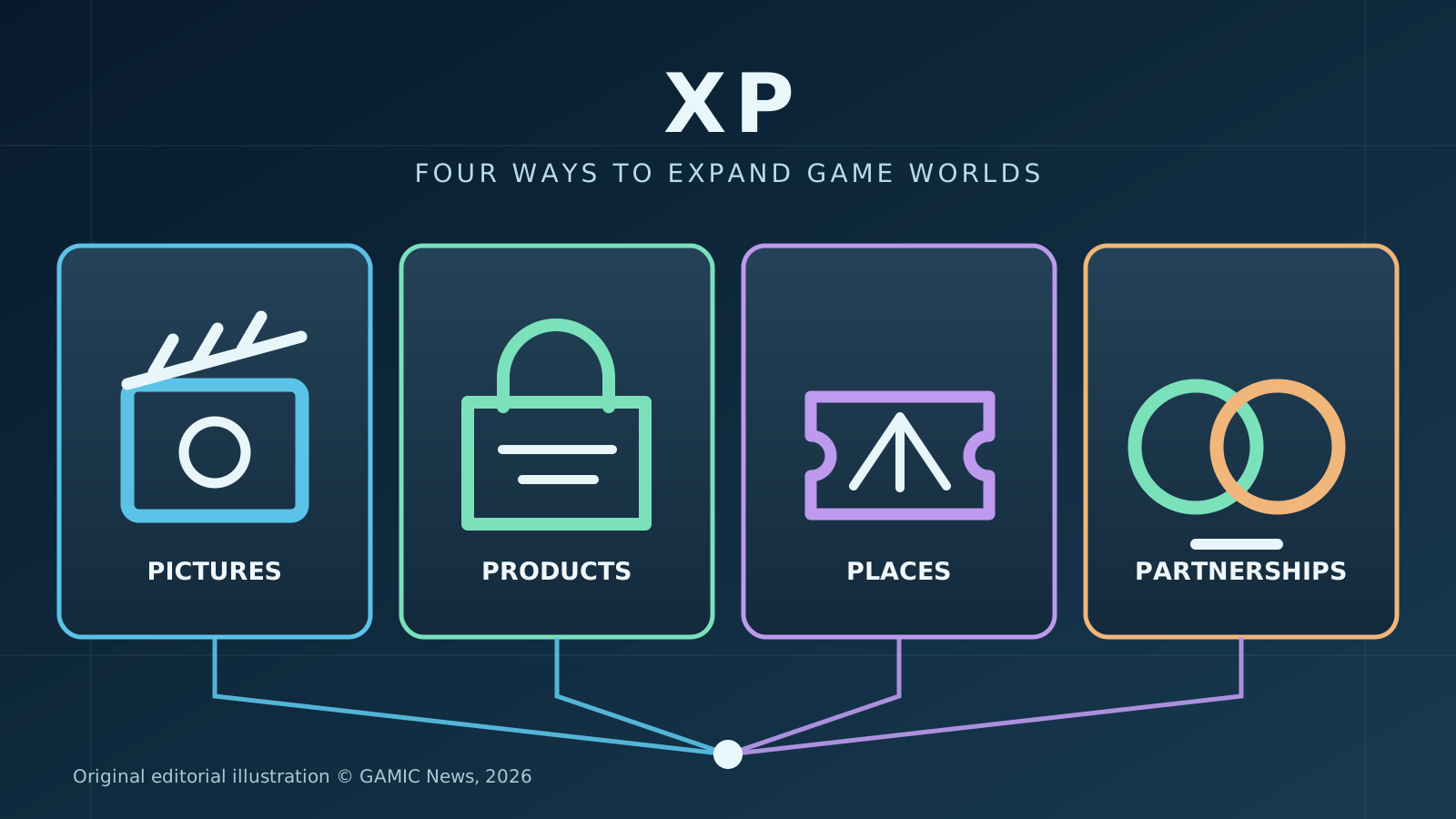

On October 8, 2026, Xbox announced XP, a new division designed to organize how its game franchises reach people through film, television, merchandise, events and partnerships. The four areas are called Xbox Pictures, Xbox Products, Xbox Places and Xbox Partnerships. This is not a new console, subscription or game release. It is a change in the structure of Microsoft's entertainment business around existing and future game worlds.
Xbox named Kayleen Walters, previously at Mojang, as president of XP. The company says the new organization combines capabilities that already existed across separate teams. That distinction matters: establishing a division can make work easier to coordinate, but it does not automatically produce a film, open a venue or guarantee a better game. Each consumer-facing project still needs creative partners, funding, production, distribution and evidence that it is actually available.
We checked Xbox's dated announcement against independent reporting from The Verge and GamesRadar+. The primary source confirms the four categories and the leadership appointment. Independent reports add context about Xbox's restructuring and adaptation plans. We have not reviewed internal budgets, contracts or future release schedules. The useful question for players and creators is what XP changes now, what remains a plan and how to assess concrete announcements as they appear.
What Xbox actually confirmed
XP is an umbrella organization for experiences outside gameplay. In its October 8 explanation, Xbox describes four investment areas: screen storytelling, consumer products, physical or broadcast experiences, and brand or creator partnerships. The company also says games remain central to its franchises. The announcement gives a framework for decision-making rather than a list of new consumer services that people can use today. Treating these categories as four already launched products would exaggerate what was said.
For the closely related practical context, read VRR Explained: Why Variable Refresh Rate Makes Games Feel Smoother.
The Verge places the announcement within Xbox's broader business reset. Teams that previously handled related projects separately may now work under a shared division. Coordination could make licensing and communication more consistent, but that is a potential benefit, not a verified outcome. For a reader, the practical distinction is between a confirmed organizational change and an individual project with a date, venue, price or distribution platform. Only the latter can be evaluated as an actual release.
Xbox Pictures: films and television need their own evidence
Xbox Pictures will focus on film, television and other forms of linear storytelling based on game worlds and characters. A screen adaptation can introduce a franchise to viewers who have never played it. Yet the storytelling problem is difficult: games often depend on agency and repeated interaction, while a film fixes the sequence of events. A recognizable character or location is not enough to guarantee a compelling script or a faithful interpretation of the original themes.
Independent coverage points to adaptation activity across Xbox-associated franchises, including Minecraft and Fallout, while emphasizing that projects sit at different stages. Readers should not assume that XP is directly producing every adaptation mentioned in news coverage. A credible project update identifies production partners, creative leadership and a distribution arrangement. A reported pitch is not equivalent to filming, and a film in development does not have a release date until the parties involved confirm one.
Xbox Products: merchandise is not a roadmap for games
Xbox Products concerns licensed goods that let fans express their interest in game franchises. Examples of the category can include clothing, collectibles and accessories, but the October announcement does not provide a complete future catalog. Xbox describes a goal of products that feel authentic to their communities. Fans can test that promise by checking design quality, appropriate licensing, availability, prices and whether artists or partners receive clear credit. The existence of a brand on a box is not a quality guarantee.
Merchandise may reach a different audience from the games, and its success should be measured separately. A popular collectible says little about technical updates, accessibility improvements or the future of a studio. Buyers should use authorized shops and examine refund terms rather than trust every listing that uses familiar artwork. For creators, licensing agreements and rights matter more than publicity. A new division may standardize these arrangements, but no universal rights policy was published in the announcement.
Xbox Places: experiences must become real events
Xbox Places covers ways for communities to meet through events, immersive attractions, broadcasts and destinations. The description is broader than a permanent theme park. A one-day fan gathering, a touring installation and an ongoing attraction are different experiences with different costs and risks. The official statement does not promise a specific park opening or a worldwide schedule. Readers should be careful when a speculative headline turns a broad category into a supposedly confirmed venue.
For another relevant perspective, read Cloud Gaming Latency: Why Your Home Network Matters as Much as Internet Speed.
Once a real event is announced, the useful details are practical: location, dates, accessibility, age requirements, ticket prices, refund rules and safety information. A successful experience should give fans something worth traveling for and avoid excluding people unnecessarily through geography or cost. The most meaningful evidence will be official venue pages and organizers with clear responsibilities. Until then, Xbox Places is a declared area of investment rather than an inventory of bookable attractions.
Xbox Partnerships: the commercial relationship matters
Xbox Partnerships is intended to connect franchises with creators, brands and communities. Such work can involve sponsorships, co-marketing, licensed experiences or other collaborations. A partnership can fund interesting projects, but it can also weaken trust if a familiar character appears in an unrelated advertisement without a convincing creative reason. Readers should look for the named parties and the actual contribution each makes rather than assuming every branded campaign benefits players.
Creators and publishers need specific terms: who owns new artwork, who can reuse footage, how revenue is shared and what disclosures are required. The XP announcement does not grant permission to use protected characters or music. Nor does it announce a public application process for independent creators. A sensible response is to wait for official programs and written conditions. Audiences should be able to identify sponsored content when commercial relationships influence a recommendation or presentation.
Why Kayleen Walters is central to the announcement
Xbox has appointed Kayleen Walters to lead XP and highlights experience across major entertainment properties. The company connects her background at Lucasfilm and Mojang to the challenge of developing franchises beyond their original medium. The Verge also reports a leadership transition at Mojang. That makes the appointment an important confirmed element of the announcement rather than an incidental detail in a marketing campaign.
Experience managing recognizable intellectual property is relevant to coordinating products, adaptations and partners, but past achievements do not prove future results. Different formats have different production cycles and creative constraints. The questions to watch are whether teams have clear responsibilities, whether project milestones become public and whether partners deliver work that fans can evaluate. A leadership announcement is evidence of a business decision; it is not independent proof of a successful movie, product line or event.
What changes for someone who owns an Xbox today
The immediate effect for a console owner is limited. XP is not described as a dashboard feature, a new controller, a game update or a change to subscription benefits. Its influence may be visible later when a series airs, a licensed product appears or a live experience opens. These activities can introduce new audiences to a franchise, but they cannot replace technical support, good game design or transparent pricing for existing customers.
Players should keep two separate scorecards. The first concerns games: quality, preservation, accessibility, platform compatibility and support after launch. The second concerns franchise extensions: storytelling, value for money, event access and responsible partnerships. Strong results in one area do not automatically fix weaknesses in the other. This distinction is especially important during corporate restructuring, when an ambitious entertainment announcement can draw attention away from the ordinary work of maintaining games people already bought.
What XP does not promise
The October 8 announcement does not give a universal calendar for movies, shows, merchandise or attractions. It does not say that every Xbox franchise will receive an adaptation. It does not list regional availability, consumer prices or guaranteed distribution platforms. Those omissions are not necessarily signs of a failed plan; they are simply information that has not been provided. Responsible reporting should preserve that uncertainty rather than invent dates or quantities.
Even projects discussed in independent articles may have different levels of confirmation. A pitch to a studio is not a signed production deal. A partnership announcement is not a completed product. A possible event is not an on-sale ticket. The best verification method is to locate the original statement from the studio, distributor, retailer or venue, then check its date and conditions. If those details are absent, a story should describe the idea as developing rather than available.
Why this is separate from Project Helix hardware news
XP concerns the reach of game franchises beyond gameplay. Xbox's hardware discussions, including Project Helix, concern devices, performance, software compatibility and the relationship between console and PC games. Both strategies may be part of a larger business direction, but they answer different questions. A person considering a future console needs verified specifications and pricing; a person interested in a television adaptation needs production and release information.
Conflating the subjects produces misleading search results. The existence of Xbox Pictures does not establish whether a next-generation device will support a particular storefront. Likewise, a console roadmap does not confirm the cast of an adaptation. GAMIC News treats those as distinct editorial topics. Readers should check the primary announcement for each claim, especially when a social post uses a familiar brand name to imply that several unrelated rumors have all been confirmed together.
How to evaluate the first XP projects
Look for concrete names, dates and responsibilities. A screen project should identify a production company and eventually its creative team and distributor. A consumer product should have a manufacturer, licensed artwork and purchase conditions. An event should identify a venue, organizer and accessible booking information. A brand partnership should disclose the parties and what the collaboration actually produces. These are observable milestones that separate execution from a slide-deck ambition.
Quality also requires independent assessment. A film trailer cannot establish the finished story, a promotional product photo cannot demonstrate durability, and an event announcement cannot guarantee the experience on the day. Reviews should disclose what was tested and avoid repeating marketing claims as measured results. The new division may provide coordination, but individual projects still deserve scrutiny. That is the standard readers should apply as Xbox begins attaching XP to more announcements.
The practical conclusion for fans and creators
Xbox has confirmed XP, its four investment areas and Kayleen Walters as leader. The company says the goal is to extend franchises into experiences that complement games. Independent reporting adds business context, but the announcement itself is not a release calendar. No responsible analysis can promise that a particular film, attraction or product will succeed before it exists and can be assessed. The distinction between confirmed structure and future execution is the core of this story.
For fans, follow official project-level announcements and compare them with independent coverage. For creators, respect licensing and seek explicit written terms before using protected material. For buyers and event visitors, verify availability, price and policies at the source. Those steps are less exciting than a list of imagined adaptations, but they give readers something useful: a way to understand the October 2026 decision without confusing corporate ambition with a product already delivered.